
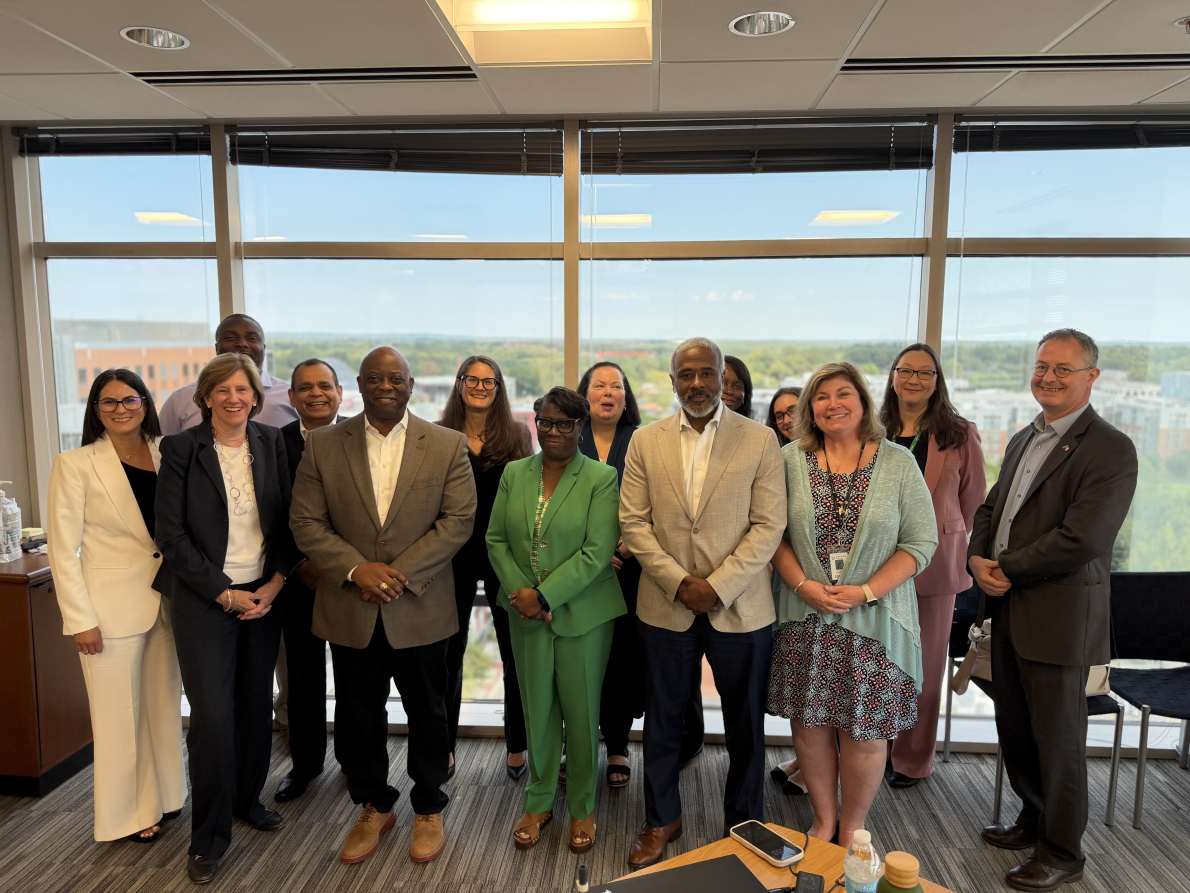
On August 24, 2026, the Duke Clinical and Translational Science Awards (CTSA) convened its executive steering committee for the first time. Executives from Duke Health, North Carolina Central University (NCCU), Durham Technical Community College, Lincoln Community Health Center, and the Durham County Department of Public Health joined CTSA principal leadership to review the goals and objectives of the CTSA and early successes from year one.
The committee advises annually on progress and strategy, ensuring Duke CTSA alignment with the priorities of the institutions and communities it serves, and acts as an escalation body for conflicts, competing priorities, or resource-sharing concerns. The meeting opened with remarks from contact principal investigator Susanna Naggie, MD, followed by Deepak Kumar, PhD, (subaward principal investigator) for the Duke-NCCU partnership and a discussion moderated by MPI Kimberly Johnson, MD. MPI Chris Lindsell, PhD, closed with next steps
Year one: From foundation to delivery
Members reviewed progress achieved in Year One of funding. Highlights included:
- 58 letters of intent and eight funded IMPaCTS Challenge Award pilot projects
- North Carolina’s first state-registered clinical research professional apprenticeship, developed with Durham Tech
- Five formal institutional partnerships, with NCCU, Durham Tech, Lincoln Community Health Center, El Centro Hispano, and the Foundation for Health Leadership and Innovation represented in CTSA governance
- More than 190 community members contributing lived expertise to guide research. Eight active Community-Partnered Research Network projects receiving support from the Community Clinical Research Organization (CCRO) infrastructure.
- 13 studies supported through the 90-day rapid start-up model, and more than 700 sessions on the Duke Office of Clinical Research research-policy chatbot
The evaluation team has developed short, medium, and long-term outcomes across all modules and is working to develop measures of impact for health.
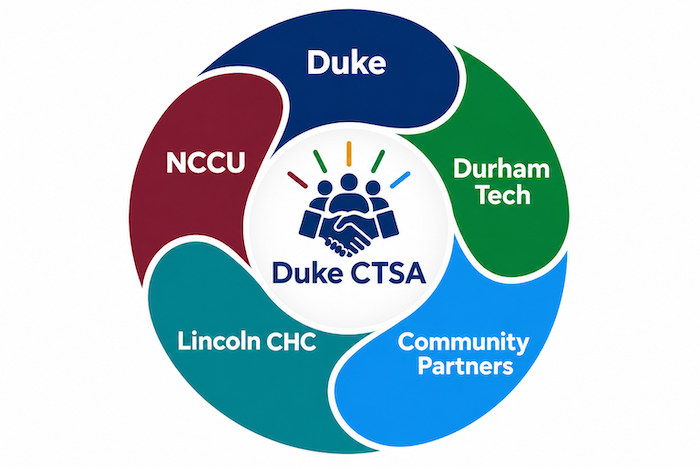
The Duke CTSA is built on partnership. Duke, North Carolina Central University, Durham Technical Community College, Lincoln Community Health Center, and community partners work together to advance research that reflects the priorities of the communities they serve.
What the committee discussed
Workforce development. Members agreed that headcounts of people trained matter less than longitudinal outcomes: Did trainees get jobs, stay in the region, and improve their quality of life, or gain sense of purpose? They suggested working backward from the intended outcome, starting as early as K–12. Three themes emerged:
- Local access. Only a small share of Durham Tech students come from Durham and Orange counties.
- Train the trainer. Host sites and mentors often lack training in how to precept; formal mentor training was seen as a high-value, scalable investment.
- Changing job market. Members stressed preparing people for the jobs of the future, especially as AI reshapes work, and noted Duke’s growing focus on the full range of research roles beyond MDs and PhDs.
Trust and community. Trust with community partners is earned, historically grounded, and must be actively maintained. Members suggested starting engagement earlier, such as in middle and high school, and working through trusted institutions, including faith communities.
AI in health. Members saw a gap in guidance on the trustworthy use of AI in public health practice, where the CTSA could add unique value. Clinicians noted that patients increasingly arrive at their appointment having researched conditions with AI tools, which health systems could treat as a partnership opportunity between clinicians and patients. Because AI is only as useful as one’s ability to verify it, members called for foundational training and described AI adoption as an ongoing journey rather than an “all-in or reject” choice.
Looking ahead
Members called for a composite, multi-dimensional definition of impact and quality of life that reflects what matters to the communities and trainees the CTSA serves. Their input will inform how the CTSA develops milestones and accountability mechanisms in Year Two. Leadership noted that Year One focused on building on existing programs and partnerships.