
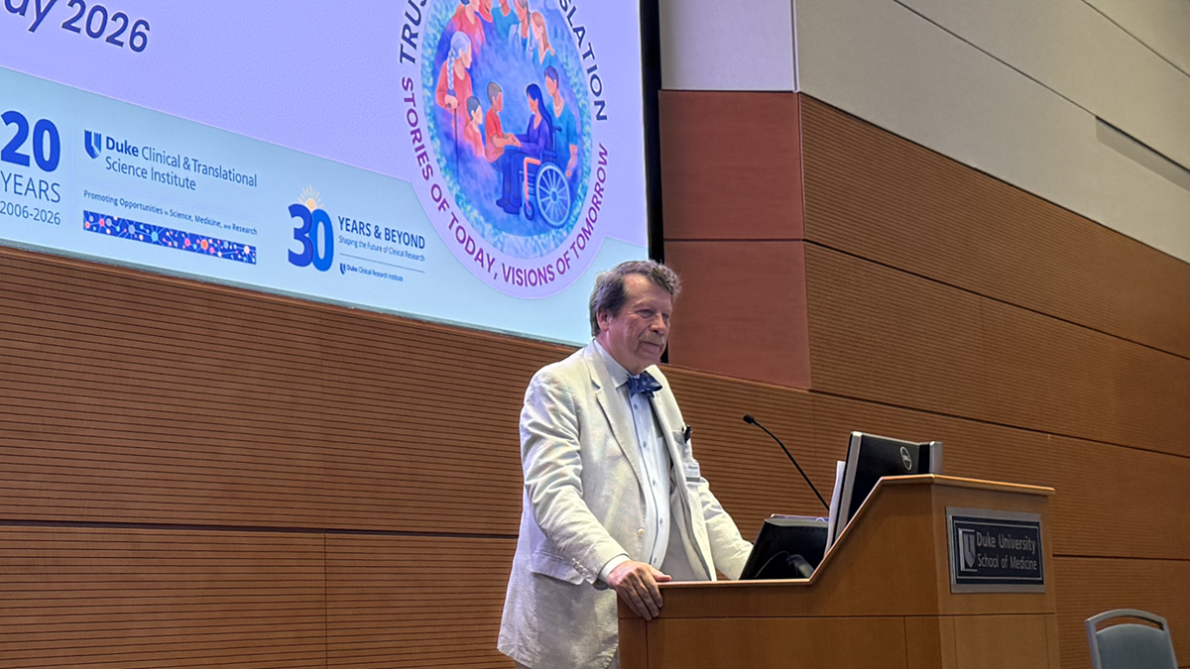
Despite decades of scientific progress, the United States still trails all other high-income countries in longevity and health — a gap that Robert Califf, MD, MACC, said remains the field’s greatest challenge: a failure to deliver what we already know to all populations at scale. His remarks set the tone for a Duke symposium on translating research into better health.
Califf, an adjunct professor of medicine, founding director of the Duke Clinical Research Institute (DCRI), and former Commissioner of Food and Drugs for the United States, gave the plenary talk at the “Trustworthy Translation” symposium, which celebrated 20 years since the first Duke Clinical and Translational Science Award and 30 years since the launch of the DCRI. The one-day event brought together researchers, educators, students, health professionals, and community partners to share practical examples of how knowledge can be translated into action that improves health.
While the path to longer, healthier lives is well established, Califf noted that the tools to achieve it don’t reach much of the population — shaped by differences in education, income, and information access. “Thanks to technology, we know about all people in our populations and what their health is, not just those who show up at the front door of our health care system,” Califf said. “We are obligated to do something about it.”
With primary care providers under strain, Califf called for a fundamental change in the U.S. health care system, to rebalance human values with financial incentives and invest effort in bringing care to communities outside the hospital or clinic.
Acknowledging that large-scale change can’t happen immediately, he noted that incremental improvements matter. Health care systems can continue to advance cutting-edge treatments while also investing in scalable strategies that improve health across entire populations, he said.
The speakers who followed emphasized the power of forming relationships and building trust in this work.
Personal connections matter
Holly Biola, MD, medical director at Durham’s Lincoln Community Health Center and a clinical professor of medicine at Duke, led a panel on a program that has led to real improvements for patients with severe hypertension. The panel included partners from Lincoln, Duke-Margolis Bass Connections, North Carolina Central University’s Department of Public Health Education, and the Duke Community-Based Participatory Research Network.
A weekly education class reduced blood pressure over a year for those who attended at least twice. Telephone outreach from students at Duke and North Carolina Central University further increased the impact. A series of scripted calls reached more high-risk individuals, many of whom were in crisis due to social — not medical — factors.
In 2022 and 2023, Duke and NCCU students called hundreds of patients, with a full-time coordinator helping expand the effort.
“Establishing a relationship and maintaining a conversation with the person is important,” Biola said. The personal connection — and the message that someone at the clinic was concerned — mattered, she added. Sustaining this type of work remains a challenge: there isn’t funding to continue the telephone outreach effort in 2026.
The blood pressure class component is featured in a two-part video from the New England Journal of Medicine.
-
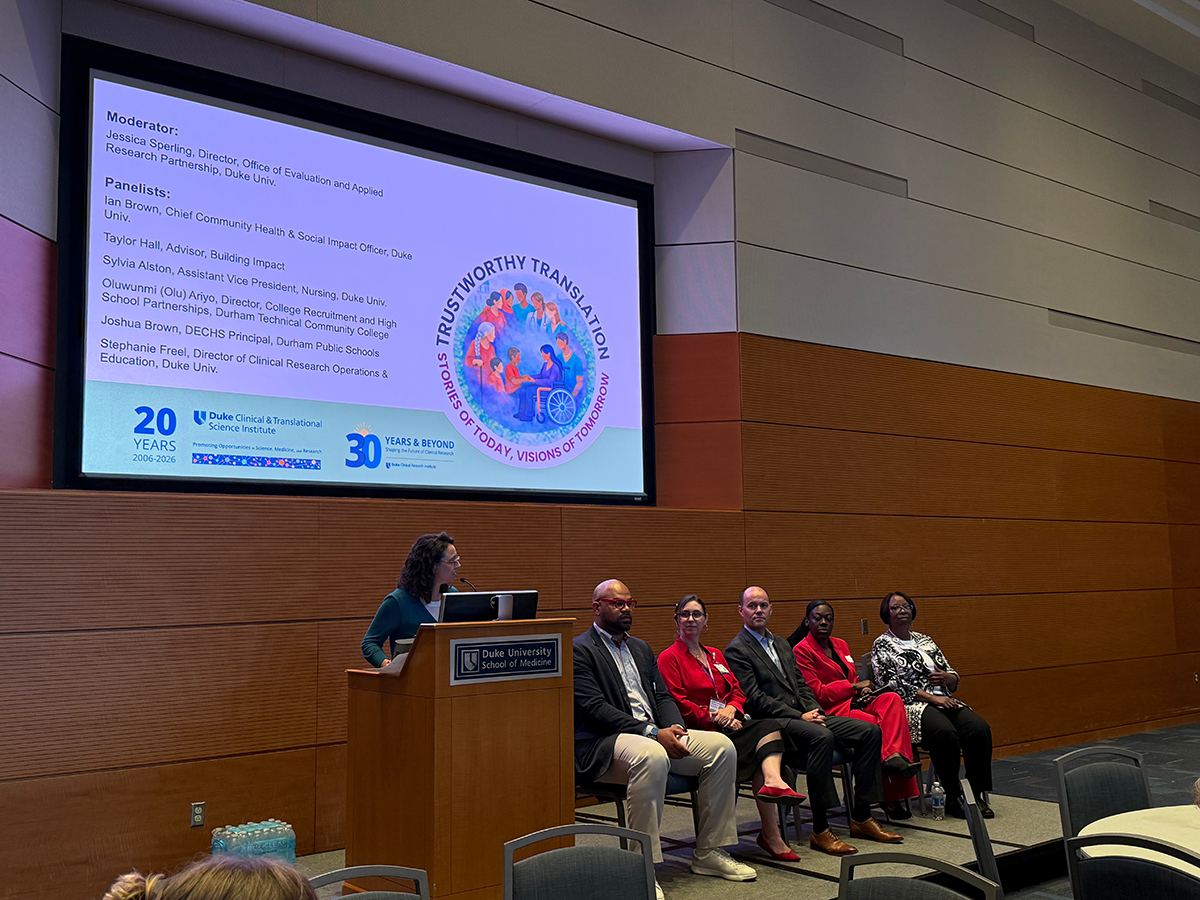 CTSI’s Jessica Sperling, PhD, moderated a panel with partners in the Durham Early College of Health Sciences: Joshua Brown of the Durham Early College of Health Sciences, Stephanie Freel of CTSI, Taylor Hall of Building Impact, Oluwunmi (Olu) Ariyo of Durham Technical Community College, and Sylvia Alston of Duke University School of Nursing.
 -
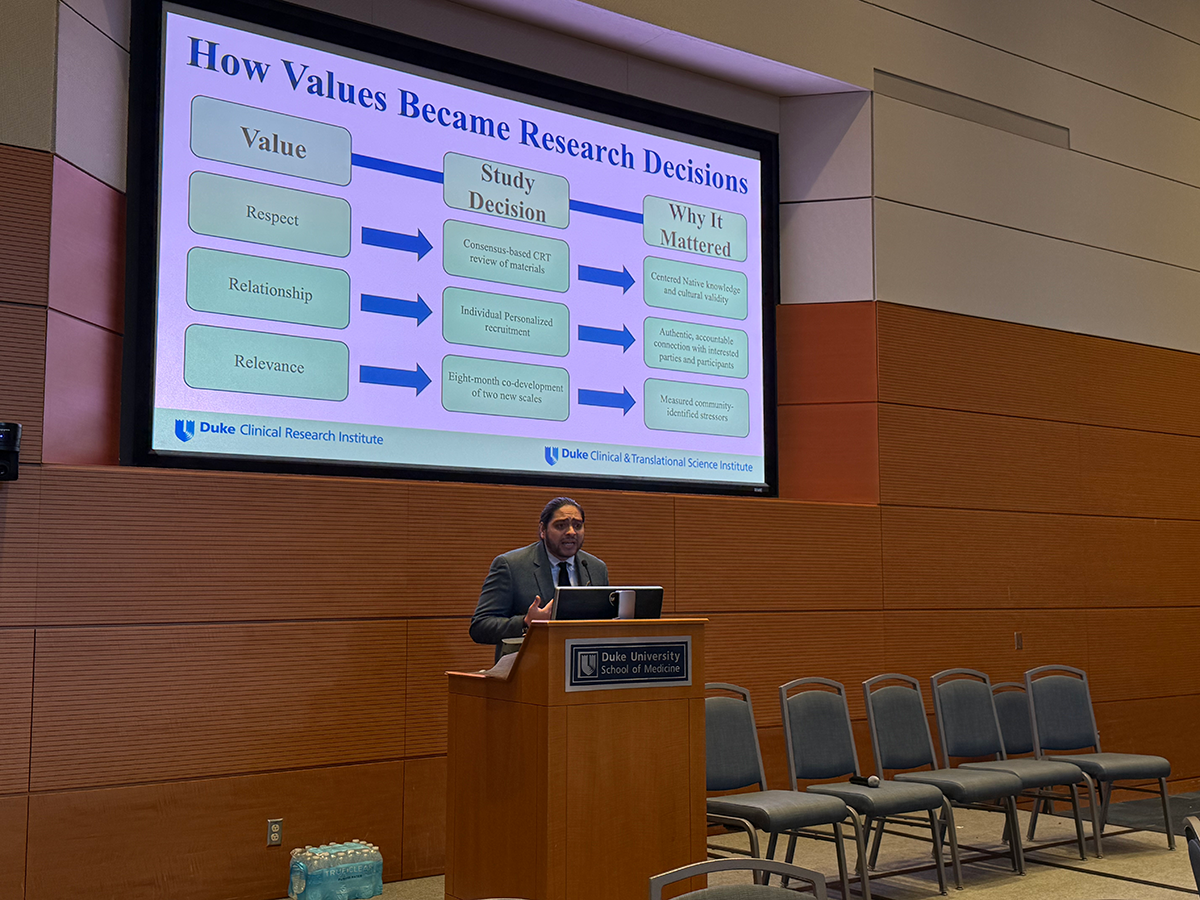 Tomas Hill of Duke Psychiatry and Behavioral Health Sciences gave a brief talk about conducting community engaged research.
 -
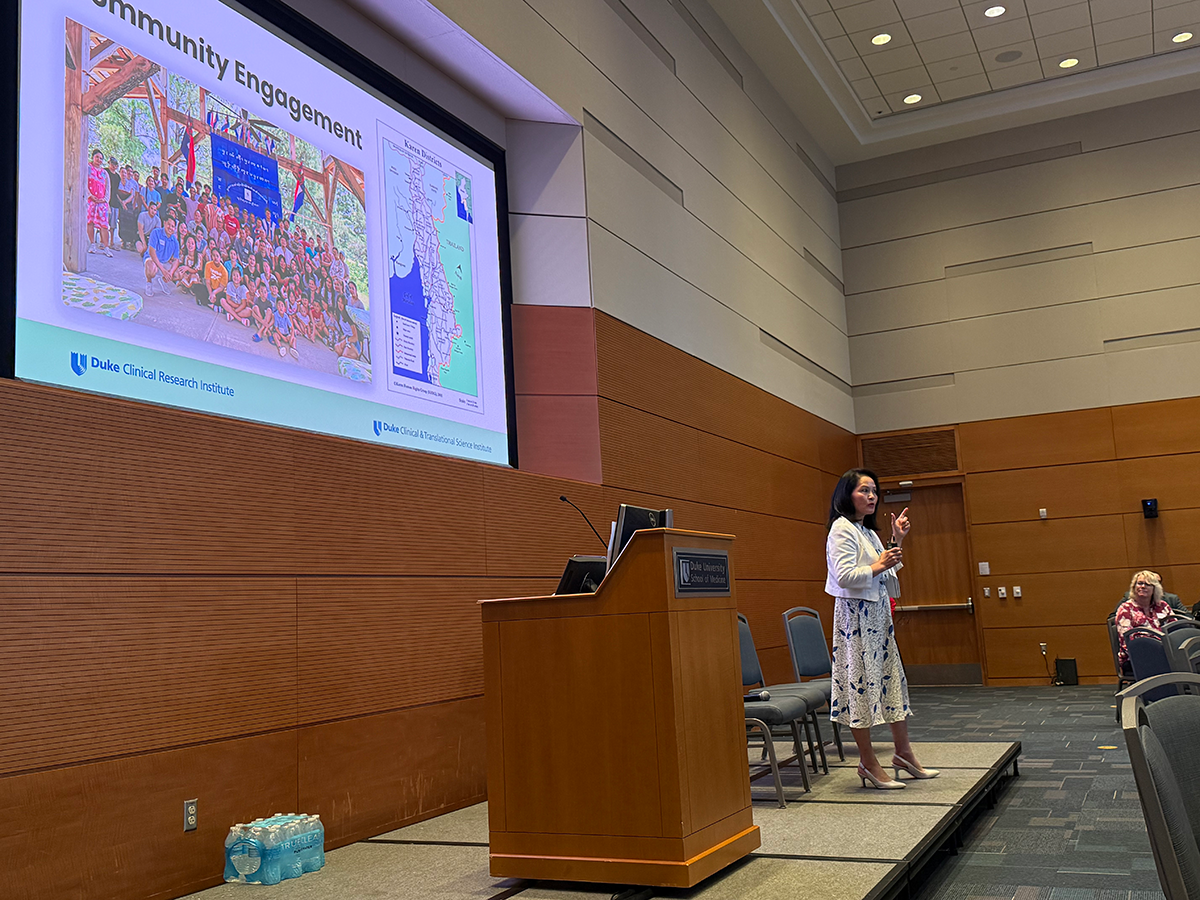 Lily Chen of UCA WAVES gave a brief talk about community-engaged research.
Setting new norms
A panel of partners in the Durham Early College of Health Sciences (DECHS) moderated by CTSI’s Jessica Sperling, PhD, said that in-person collaboration and setting shared norms have been instrumental in the success of this collaborative effort between Durham Public Schools, Durham Technical Community College, and Duke Health. The school, supported by a grant from Bloomberg Philanthropies, creates pathways for Durham high school students to begin careers at Duke Health in surgical technology, nursing assisting, and clinical research.
DECHS enrolled 104 ninth graders in 2025, with just one student not returning next year, said principal Joshua Brown. The 2026-2027 class will enroll 101 students.
The Durham partnership began in 2023, bringing together institutions with distinct cultures and ways of operating. Panelists noted that progress has depended on a willingness to adapt, build new processes together, and remain flexible when something isn’t working.
They described a deliberate effort to assess and strengthen the partnership itself, using a structured improvement process that includes regular surveys, analysis, and group discussion. “If the partnership isn’t doing well,” Sperling said, “we can’t serve the students we need to serve.”
Consistent, everyday effort
Other brief talks emphasized the importance of building trust and sustained engagement with communities when conducting health research. Lily Chen, RN, MA, executive director of the United Chinese Americans (UCA) Youth Mental Health Collaborative and an NCCU nursing lecturer, partnered with 12 community organizations to conduct a multilingual survey across Asian immigrant populations in North Carolina, with respondents identifying mental health as their top health priority. She emphasized that trust is built through consistent, everyday effort rather than one-time outreach. “It’s not transactional,” she said.
Tomas Hill, a clinical research specialist with Duke Psychiatry and Behavioral Health Sciences who has partnered with indigenous populations in research work, emphasized translating respect and other core values into concrete study decisions. Examples included consensus-based review of materials and personalized recruitment to co-developing measures that reflect community-identified stressors.
Together, the examples shared throughout the day highlighted both the promise and the challenge of translating knowledge into better health — work that requires time, trust, and sustained collaboration.